
Bombay Beach
An artistic, apocalyptic oasis at the Salton Sea.

You know those destinations that land on your radar, the ones you make a mental note of, only to have them collect energetic dust over time? “I’ll go there someday,” you tell yourself. That was me and Bombay Beach at the Salton Sea.
I’d driven past this elusive body of water, just beyond Indio, countless times on road trips heading east on the I-10 freeway. Yet, I never made the effort to stop and explore. Perhaps it was because I hadn’t invested the time to research it, something that usually sparks my curiosity and deepens my desire to experience a place firsthand. But that changed not too long ago.
The Backstory
A few years ago, I traveled to Joshua Tree to celebrate my friend Jens’ 50th birthday with her and her family. They had rented an incredible Airbnb near the entrance to the Joshua Tree National Park, an oasis of modern design, surrounded by the vast desert landscape.
Evenings at our desert retreat were magical. We lingered over home-cooked meals, savoring the ritual of positioning ourselves for the best vantage point as the sky transformed. The ombré shift from golden hues melting into soft pinks, then deepening to violet, and finally settling into an indigo abyss as the moon took its place, framed by millions of stars radiating from the Milky Way. There is truly nothing like stargazing in the desert.
While our nights were spent in quiet reverence, our days were filled with adventure. Having visited Joshua Tree many times before, I naturally fell into the role of tour guide, curating an itinerary of must-see highlights. We lucked out that our visit coincided with one of High Desert Test Sites monthly tours, an absolute must-do for anyone interested in art and desert living. Of course, we also hiked through Joshua Tree National Park, paid a visit to the Noah Purifoy Outdoor Desert Museum, visited the sonic wonder of the Integratron, followed by lunch at my favorite roadside café, La Copine.


It was that particular meal at La Copine that ignited Jens' and my fascination with the Salton Sea, specifically, Bombay Beach.
Packed into a four-top by the window, we found ourselves next to a lively group of stylish Angelenos whose energy was undeniably magnetic. The man at the head of the table, dressed in all black, commanded the room, not just in appearance but in presence. He seemed to be leading the charge of this eclectic gathering.
Close proximity made eavesdropping effortless. Their conversation drifted between art, design, and cultural revival, topics that immediately piqued our interest. As we later learned from our waitress, the man at the head of the table, was a well-known hotelier and cultural visionary, personally invested in bringing art, community, and creative energy back to Bombay Beach.
That was the moment the Salton Sea stopped being just another destination collecting dust in the back of my mind. It became a place I needed to experience for myself.
And there it was. Curiosity piqued and the seed firmly planted for a visit to the Salton Sea to learn first hand, what it was all about.
Fast forward five years to a holiday weekend in February 2025. Jen and I reunite once again, this time with clear intention and our sights set on finally exploring the place that had lived rent-free in our imaginations for years: Bombay Beach.
We met at Crossroads Café in Joshua Tree, me driving in from Ojai, Jen coming up from Orange County. From there, it was about an hour-and-a-half drive to Bombay Beach. Car loaded, energy buzzing, it was finally go time.
First Impressions: Dystopian Wasteland
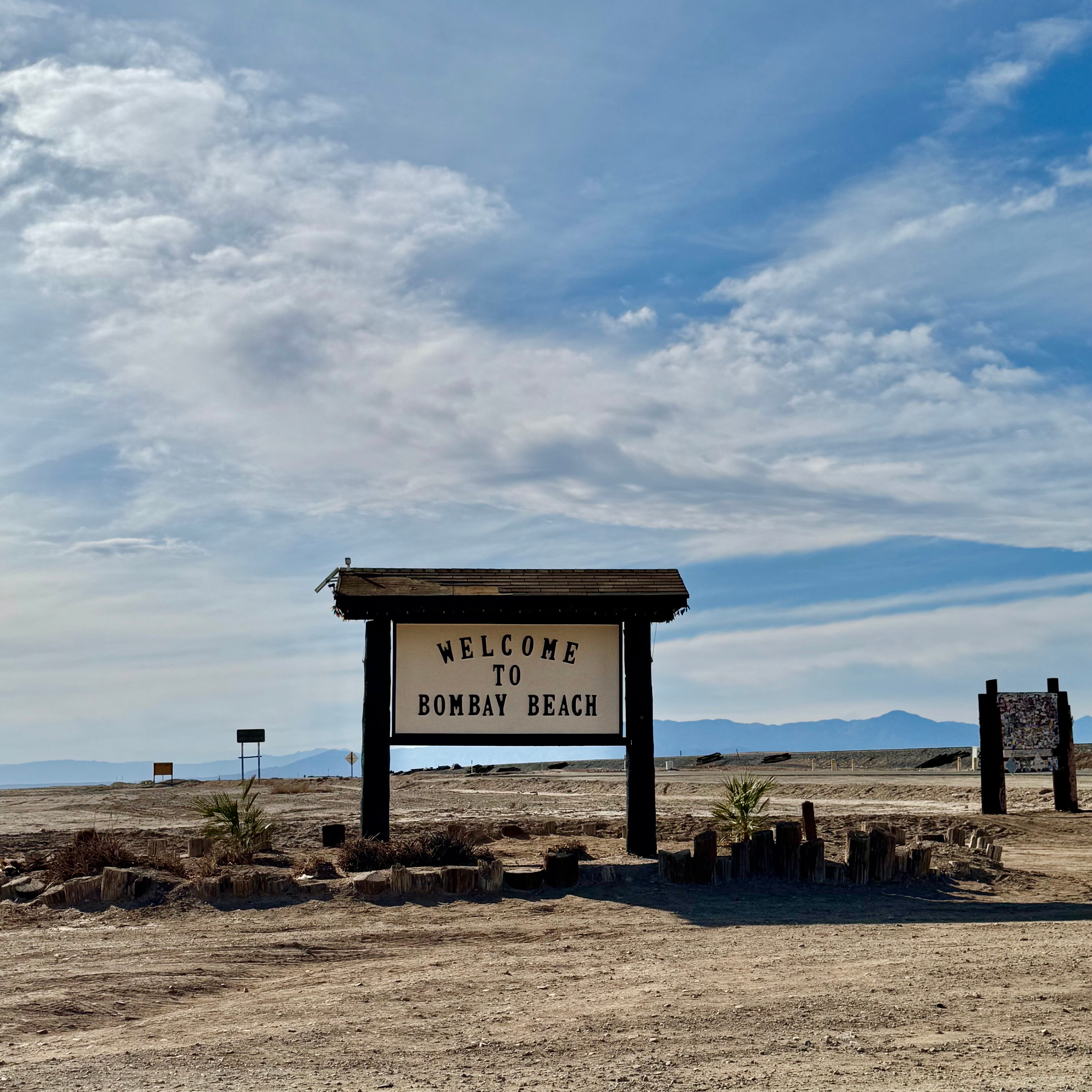
Following California State Route 111 south of Indio, we traced the eastern shoreline of the Salton Sea until we reached our turnoff onto Avenue A. Greeted by the “Welcome to Bombay Beach” sign, we began to take in the immediate landscape and let’s just say, nothing quite prepares you for the impact of this place.
As we drove down the main road, we passed The Ski Inn a lone beacon of life that hints at the presence of community. But that flicker of hope quickly dims as one derelict structure after another lines the road to the “sea.” Abandoned homes, skeletal trailers, and sun-bleached relics whispering stories of a past long gone. You can’t help but ask: “How does this place even still exist? And why would anyone want to live here?”
We were about to find out.
About five blocks in, we reached a dead end, an enormous berm made of sand, constructed to shield the town from the onshore winds carrying the acrid stench of decay: dead fish, toxic runoff, and the remnants of a once-glorious resort era now lost to time and abandonment.
Turning left, we drove another block and noticed a sandy ramp, carved out to give vehicles access to the shoreline. Other cars were parked nearby, so we followed suit, curious about what lay beyond.
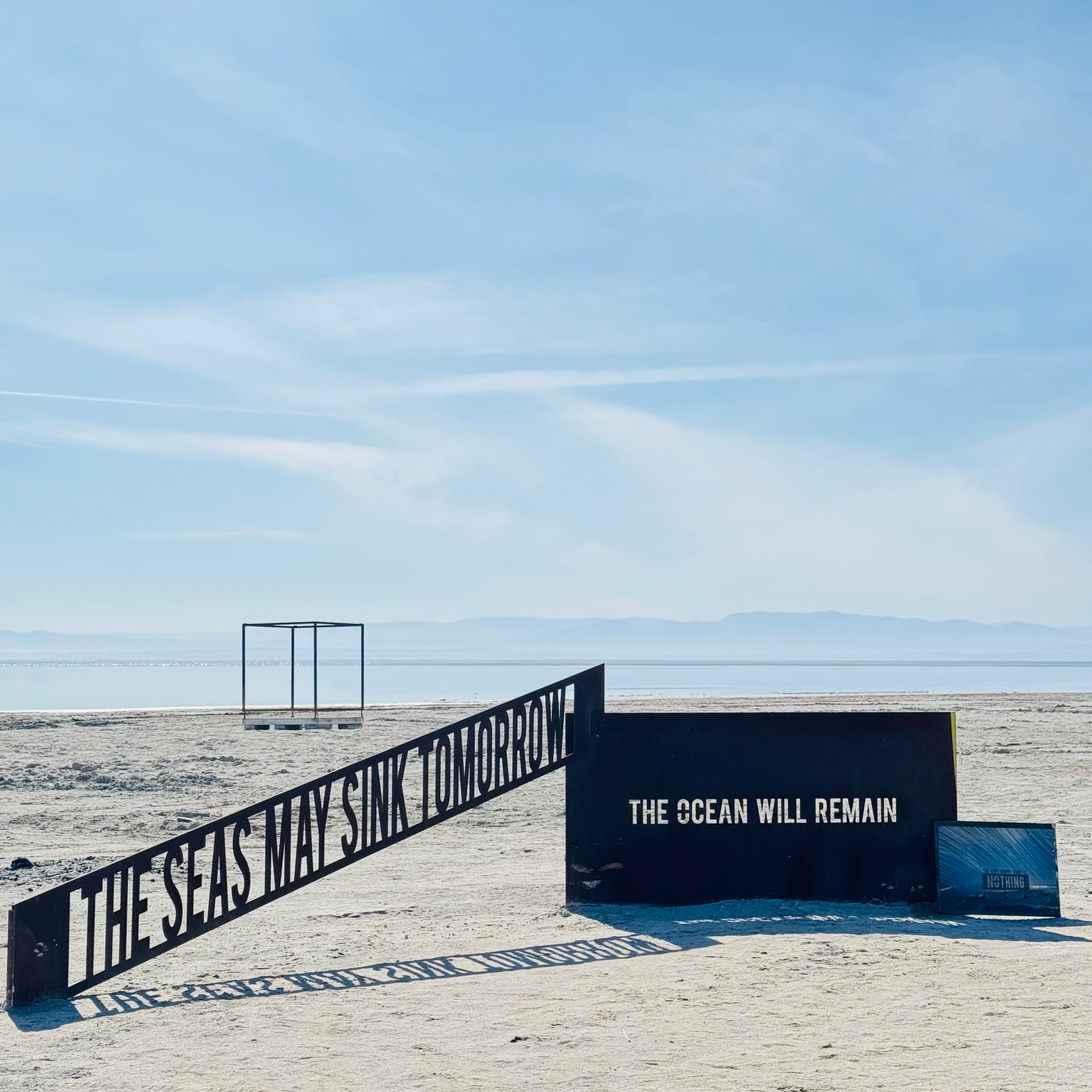
And there it was, the beginning of our Bombay Beach art experience. Scattered along the cracked, salty beach were dozens of assemblage artworks: sculptures, installations, and surreal constructions that ranged from absurd and whimsical to deeply poignant and prophetic.


Some of the pieces teetered at the shoreline’s edge, coexisting with fish skeletons and the mossy, oil-streaked tide, remnants of both natural life and human excess. There was an unmistakable smell: a potent blend of decay, salt, and something more sinister, as if the past still lingered in the air, unresolved.
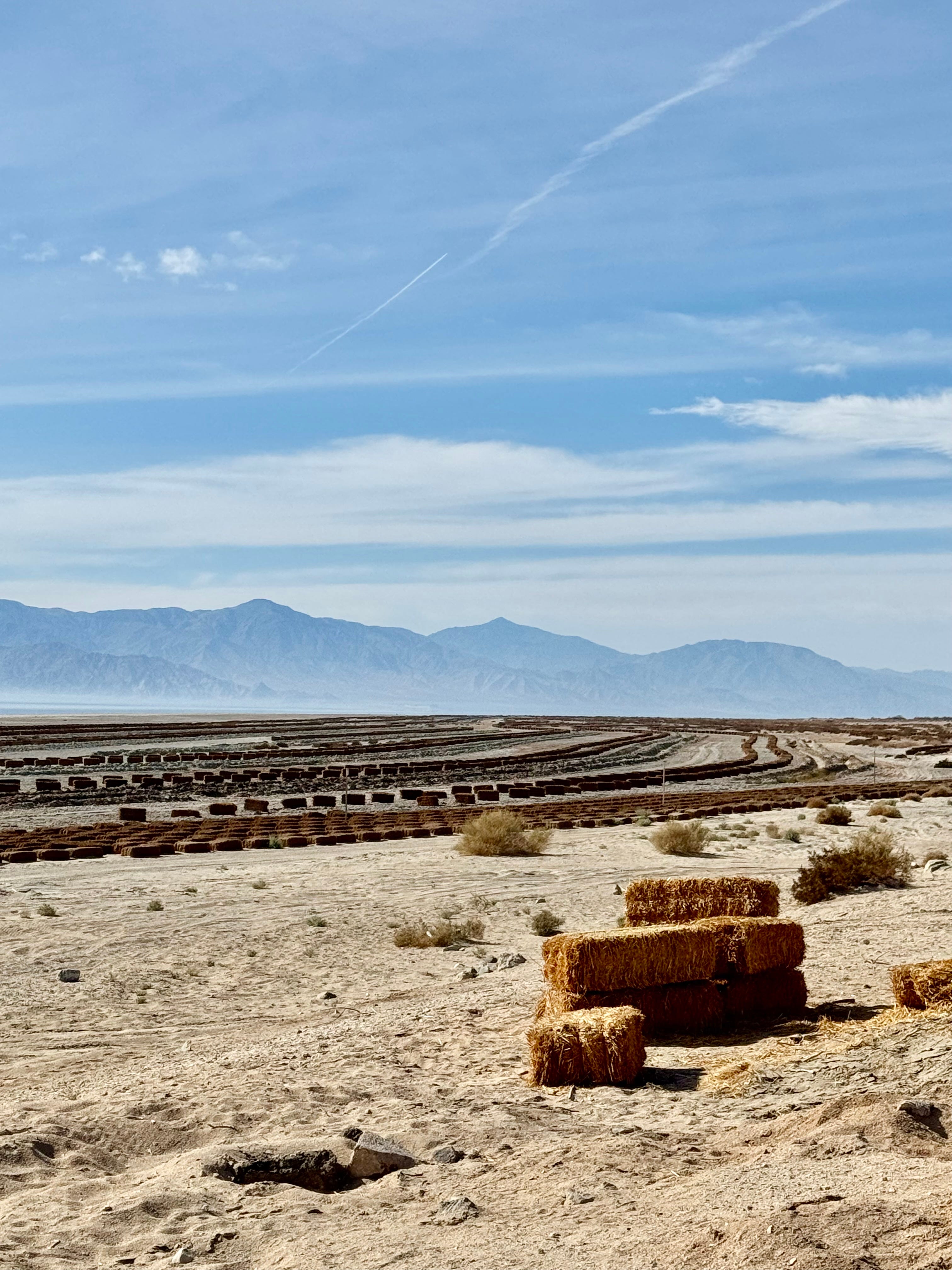
We got back in the car and drove to another location, over yet another berm, only to be met by an astonishing sight: a massive installation of neatly arranged straw bales stretched across the coastline like a geometric patchwork.
At first glance, it appeared to be another large-scale art piece. But upon further investigation, we learned it was something else entirely: an intentional environmental structure designed to block the wind and minimize the smell drifting into town. It also serves a more poetic purpose, providing a safe landing zone for migratory birds that can no longer land on the toxic waters. The hay bales have become a refuge, a new ecosystem born out of loss.
After thoroughly scouring the beach and soaking in its peculiar beauty, we ventured back into town. With our senses now attuned to the rhythm of this strange, draconian place, we found ourselves spotting art everywhere, tucked between rows of abandoned homes and trailers, hidden in plain sight. One surprise after the next. Each one a discovery, and each more unexpected than the last.


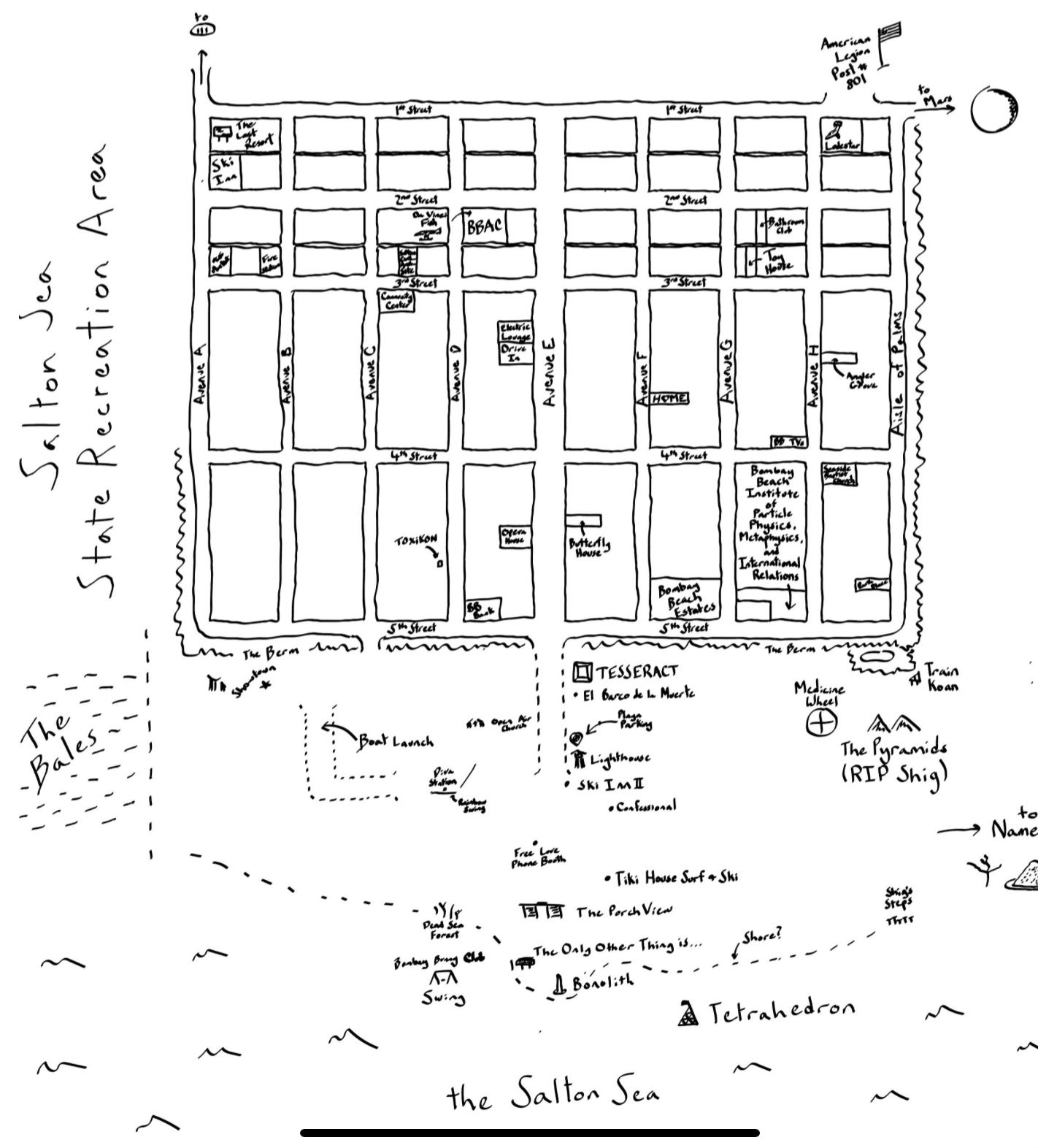
For a more inner-active map, check out the Bombay Beach Map.
Bombay Beaches Storied History
To truly grasp the strangeness and allure of Bombay Beach, it helps to understand its past, a surreal timeline of human ambition, environmental accident, and artistic reinvention.
The Salton Sea was never meant to be a sea at all.
In 1905, the Colorado River breached an irrigation canal in California’s Imperial Valley, flooding the Salton Sink, a low-lying basin that had filled with water sporadically throughout history. This accidental inland sea was born not from a master plan, but from a mistake.
“Despite being smack dab in the blistering desert, the high rate of evaporation was offset by runoff from neighboring farmland… and for the next few decades, the water level remained relatively stable.” - Harpers Magazine
By the 1950s and ’60s, developers were dreaming big. The Salton Sea was marketed as the next Palm Springs, a glamorous oasis for sun-seeking urbanites from Los Angeles. Marinas popped up. Vacation homes were built. The sea became a playground for the famous and the curious alike. At its peak, it attracted 1.5 million visitors a year, including stars like Sonny Bono, Frank Sinatra, and Desi Arnaz.
In the 1970s, a series of powerful tropical storms swept through, flooding the seaside towns that had sprung up along the water’s edge. Homes were destroyed, dreams washed away. Developers retreated. What was once imagined as a “Riviera of the West” began its slow, surreal transformation into ruin.
By the 1990s, nearly a century of agricultural runoff, laden with salt, fertilizers, and pesticides, had created a toxic brew. Algal blooms choked the oxygen from the water, leaving millions of dead fish along the shoreline in their wake. The air grew thick with an unbearable stench. The land became unstable. Tourism vanished. What remained was a ghost town surrounded by an ecological disaster.
And yet, out of this bleakness, something unexpected began to emerge.
By the mid-2010s, a quiet renaissance began to emerge. Artists, drawn to its eerie beauty and sense of possibility, began arriving. Graffiti art washed over crumbling buildings, transforming decay into expression. What had recently been considered a forgotten wasteland suddenly became a blank canvas.
In 2016, this creative momentum crystalized into the Bombay Beach Biennale a renegade celebration of art, music, and philosophy founded by Tao Ruspoli (an Italian Prince and Filmmaker), Stefan Ashkenazy (Owner of Petit Ermitage Hotel and the gentleman Jen and I overheard at La Copine all those years ago), and Lily Johnson-White (Public Art Producer for the Johnson & Johnson Family). Their mission? To create something out of nothing. To breathe new life into a town long written off, by transforming its abandoned structures and dying landscape into powerful, imaginative works of art and experience.
And just like that, here we are, present day, where the small, unincorporated community of Bombay Beach finds itself in the midst of yet another unlikely chapter. Not one of boom or bust, but of reinvention, hope, and creative resilience. Yet alongside the sense of optimism that now lingers in the air, there remains an undeniable truth: beneath the surface lies a landscape still scarred by a century of environmental neglect, a formidable challenge that cannot be ignored.
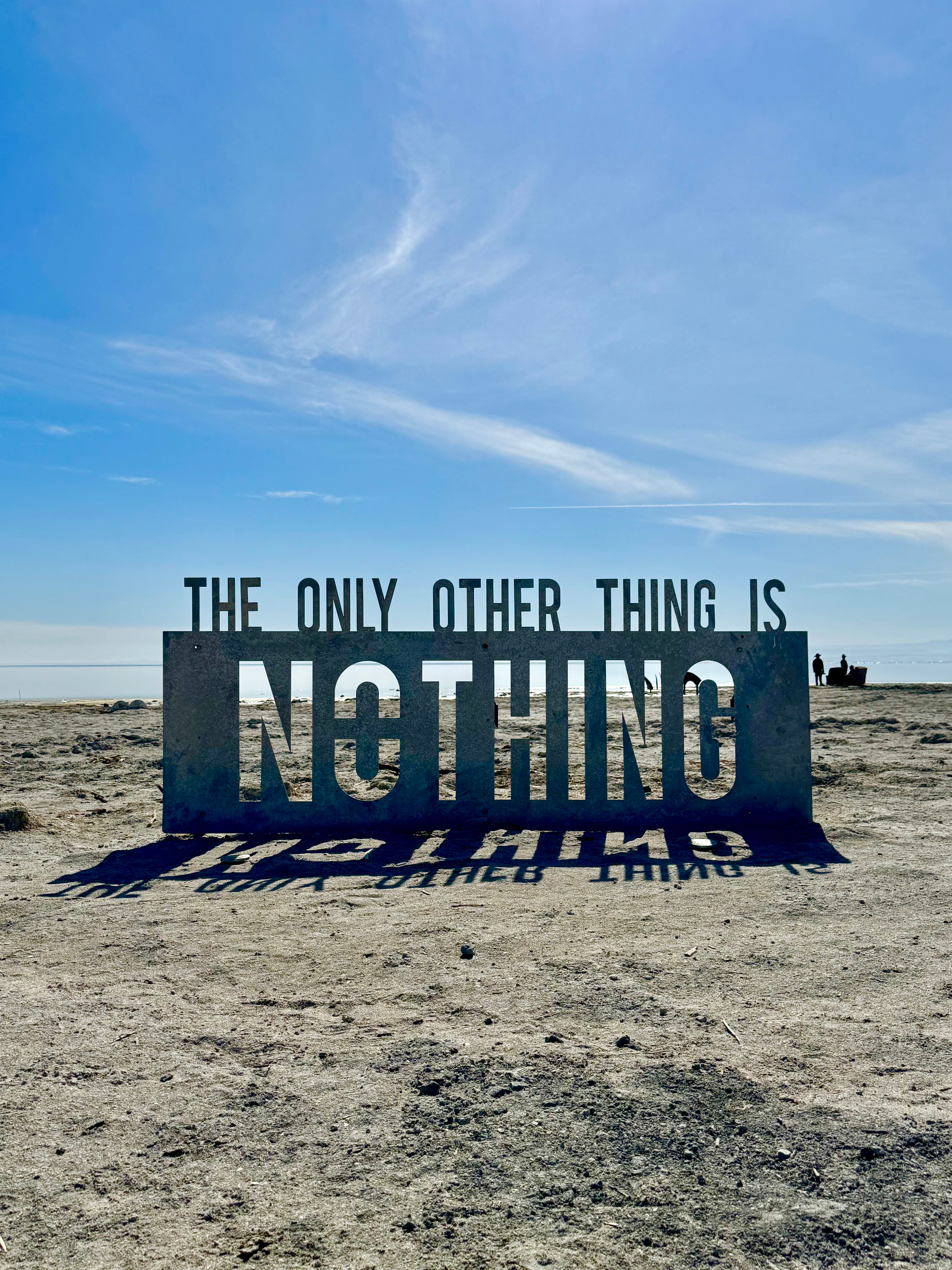
In reflection, our visit to Bombay Beach exceeded expectations in the most unexpected ways. It felt especially poignant and timely given the current political climate, where so much feels uncertain and at stake. The story of this place echoes a larger truth: how easily our communities, cultures, and environments can fall victim to the shortsightedness and neglect of a select few. And yet, amidst the decay and desolation, there is something resilient, hope rising from the ruins. Bombay Beach stands as a testament to the power of creative vision and human tenacity, offering a glimmer of what’s possible for the next generation of artists, activists and believers.
Thank you so much for joining me on this journey.
This sounds fantastic - can’t help but want to visit with your wonderful write-up!
Fabulous Wanda!!! of course I’ve always wanted to go there now I really do. You make me wanna explore the desert so much and boy do I wish I lived closer.
I love the way you write and I just have to repeat one line “as if the past lingered in the air, unresolved “ ….wonderful!
The only thing missing was; did you check out any cafés ,galleries and are there stores there? You know I am the quintessential shopper who needs to know😉
Keep exploring because I want to keep reading about it!!